
Pedestal Systems
Adjustable pedestal ranges offering tool-free, four-step installation for raised flooring systems. Compatible with ceramic, natural stone, wood, WPC composite and terrazzo coverings, and with aluminium support profiles.
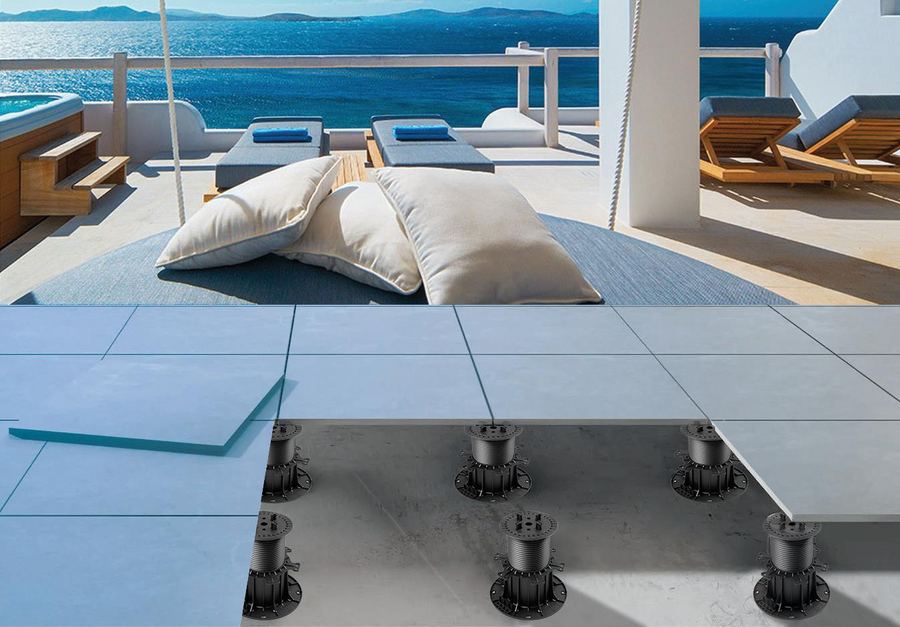
Adjustable Height Range
A base pedestal range offering adjustable height from 21–902 mm. Precise tilt adjustment of up to 5% on the bodies.
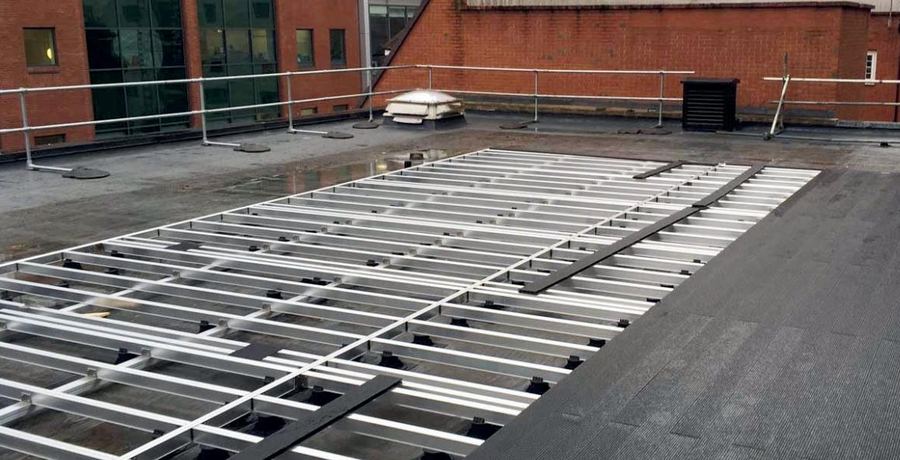
Angle and Height Adjustable Range
An adjustable pedestal range for sloped surfaces, offering angle compensation of up to 7°.
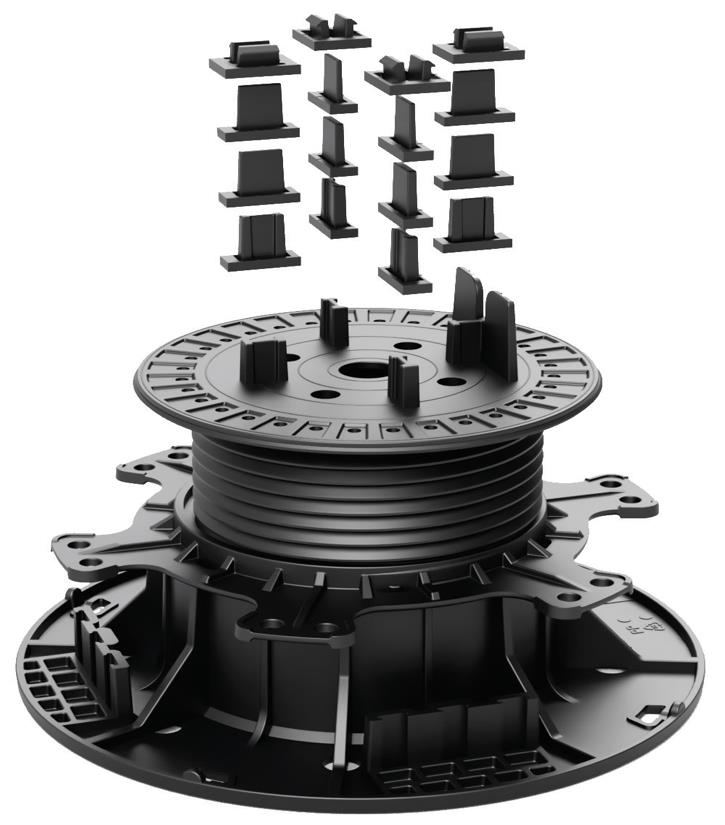
Fixed Height Range
A one-piece, fixed-height pedestal range — 13 mm and 10 mm types can be stacked.
| Feature | Value |
|---|---|
| Adjustable height range | 21–902 mm (including risers) |
| KPS angle compensation | Up to 7° |
| KA-SC-DX joint angle compensation | Up to 5° |
| PCX pad angle compensation | Up to 2° |
| Joint spacing thickness options | 2 / 3 / 4 / 5 mm |
| KPF fixed heights | 13 mm and 10 mm (stackable) |
| Aluminium profile compatibility | 40–50 mm width |
Accessory Range (KA)
Pads, risers, joint and frame partsApplication Gallery
Real project and installation photographsGet in touch with us about Pedestal Systems
Share your project measurements and colour preference, and let’s work out the most suitable system and quantity together.
Phone
Where It's Used
Pedestals raise a finished surface above the structural deck, which is the standard approach for rooftop terraces and balconies where drainage, waterproofing membranes or services need to stay accessible beneath ceramic, natural stone, wood, WPC composite or terrazzo coverings — the KP range's 21–902 mm adjustable height covers most rooftop build-ups.
The KPS range's angle compensation (up to 7°) is specified for sloped surfaces such as roofs with fall for drainage, while the fixed-height KPF range suits level substrates where a simple, one-piece support is enough. Confirm your substrate slope and finish material with us so we can recommend the right range.
Maintenance & Cleaning
Pedestals themselves need little upkeep once installed correctly; periodic checks that risers and joint spacers remain seated (especially after freeze-thaw or heavy foot traffic isn't typical for this climate, but after any structural movement) help keep the raised surface level. The PDX pad's sound-dampening PVC layer and the PCX pad's fixed 2° angle are functional components, not maintenance items.
Frequently Asked Questions
What height range do adjustable pedestals cover?
21–902 mm, including risers, across the KP range's five sub-models (KP-21-27 through KP-110-202).
Can pedestals be used under different flooring types?
Yes — they're compatible with ceramic, natural stone, wood, WPC composite and terrazzo coverings, as well as aluminium support profiles.
What are the KPS pedestals for?
Sloped surfaces — the KPS range offers angle compensation of up to 7° to level a raised floor over a sloped structural surface.
What's the difference between adjustable and fixed-height pedestals?
The KP and KPS ranges adjust in height (and, for KPS, angle); the KPF range is a one-piece, fixed-height pedestal (13 mm or 10 mm types, which can be stacked).
Does a raised-floor pedestal system allow access to the structure below?
Yes — that's the main functional benefit of a pedestal system versus a bonded finish: the covering can be lifted for access to drainage, waterproofing or services underneath.
What joint spacing options are available?
2, 3, 4 or 5 mm, set using the DX joint spacer accessory.